![]() |
News director for Channel 19 in El Paraíso, Honduras, Luis Arturo Mondragon, was assassinated last night as he sat with his son outside his home. This brings the number of media professionals killed this year to nine. Mr. Mondragon had been the target of threats in the weeks leading up to his death for his work in exposing corrupt local and national officials. All the journalists killed this year had been reporting on corruption as well as human rights violations and drug trafficking.
Violence against journalists in Honduras has increased since last year’s coup in June. Both journalists and their families alike have been the targets of over 300 reported attacks including assassinations, abuse, intimidation, and censorship. Honduran Security Minister Oscar Alvarez insists that the killing of journalists is not an organized effort to silence or intimidate the news media. However, only one murder case has plausible suspects while all other cases continue to go unsolved.
The violence has made Honduras one of the most dangerous places for journalists and has forced some to flee the country for their safety. Last week, Karol Cabrera fled to Canada and sought political asylum after surviving two attempts on her life. The first attempt in December left her pregnant 16-year-old daughter dead.
![]() |
Carlos Fernando Chamorro, a popular Nicaraguan journalist and outspoken critic of President Daniel Ortega, announced this week that he will be leaving Telenica Channel 8 after the station was allegedly sold to relatives of the president. The son of former President Violeta Chamorro (1990-1997) and martyred newspaper editor Pedro Joaquín Chamorro, he hosts a nightly news show, Esta Noche, and a weekly program, Esta Semana.
Described by Carlos Lauría of the Committee to Project Journalists as “the most influential journalist in Nicaragua,” Chamorro has criticized the Ortega administration for attacks on free speech.
On Sunday, during his last taping of Esta Semana, he explained his departure: “The continuance of the programs Esta Semana and Esta Noche would validate his history of abuses against the freedom of expression during his presidency… my continuance at this channel would create the image of tolerance that the regime has never had nor will ever have toward independent media in this country.” Esta Semana, which first aired in 1994, had been on Channel 8 since 2005. Esta Noche had aired since 2006.
Nicaraguan media has reported that Carlos Briceño, the station’s previous owner, sold Channel 8 for $10 million.
![]() |
Cuban blogger Yoani Sánchez says she was detained and beaten Friday, as she and fellow bloggers were walking to an anti-violence protest. She and Orlando Luis Pardo Lazo were forced into a car in the Vedado neighborhood of
Sánchez described one of her attackers saying: "This is as far as you're going, Yoani, I've had enough of your antics." Sánchez' blog, Generation Y, which has earned her the Spanish Ortega y Gasset Prize and Columbia University's Maria Moors Cabot Prize and receives an estimated 1 million hits per month, is highly critical of the Cuban government.
The assault on Sánchez comes less than a month after Cuban authorities denied her permission to travel to receive the Maria Moors Cabot Prize in
![]() |
Tonight Columbia University’s Graduate School of Journalism will host the 71st annual Maria Moors Cabot Prize for outstanding reporting on Latin America and the Caribbean. New York Times veteran Anthony DePalma, O Globo columnist Merval Pereira and Christopher Hawley, Latin America correspondent for USA Today and The Arizona Republic will be present to collect their awards, which include a $5,000 honorarium. However Cuban blogger and dissident Yoani Sánchez, who was awarded a special mention from the awards committee won’t be there. Sánchez confirmed on Monday that Cuban authorities denied her request to travel to New York to accept the prize.
The Generación Y author has won international accolades for the blog she founded in 2007. In 2008 she won Spain’s prestigious Ortega y Gasset prize for digital journalism; later that year Time distinguished her as one of the year’s 100 most influential people. Her blog is translated into 15 languages and receives over 1 million visitors per month.
She is the first blogger to receive recognition from the Cabot Prize Board, which describes her writing as "...a pitch-perfect mix of personal observation and tough analysis which conveys better than anybody else what daily life ― with all its frustrations and hopes ― is like for Cubans living their lives on the island today.”
Ms. Sánchez describes her frustration at not being allowed to leave Cuba to accept the award more eloquently than anyone else could:
“All these difficulties to get permission to leave evoke for me the words of …Carlos Aldana. In an interview in 1991 for the Spanish magazine Cambio 16, the former number three in power in Cuba said: 'This year Cubans will be able to travel abroad freely.' Only it didn’t specify if we were going to do it on the wings of our imaginations and if it would be in a year containing twelve months or nearly two decades.”
![]() |
Columbia University’s graduate school of journalism announced on Monday that Yoani Sanchez, author of Cuba’s most prominent independent blog, Generación Y, will be awarded a Maria Moors Cabot Prize and special citation for outstanding reporting. For the past 71 years The Cabot journalism prize—the oldest international award in journalism—has been conferred to journalists “who have covered the Western Hemisphere and, through their reporting and editorial work, have furthered inter-American understanding.” Past winners include Peruvian journalist and author, Mario Vargas Llosa and Mauricio Funes, the President of El Salvador.
The school of journalism’s official press release calls Sanchez’s blog “a pitch-perfect mix of personal observation and tough analysis, which conveys better than anybody else what daily life—with all its frustrations and hopes—is like for Cubans living their lives on the island today.” They also announced a special citation to Sanchez “for her courage, talent and great achievement” of putting the rest of the world in touch with Cuba.
In her response from Cuba, Ms. Sanchez said the most important thing about the honor was that it gives her prestige and a degree of “protection” from possible repressive actions by the Cuban government. She also indicated she would “use the prestige and protection that the Cabot Prize brings with it to continue to grow the Cuban blogosphere” and to support other future projects.
It is very unlikely that Ms. Sanchez, who has been labeled a “professional dissident” by the Cuban regime, will be permitted to travel to New York to receive her prize at the award ceremony in October. Instead, she says she travel in a virtual manner, as she does every day through her blog.
Read more about Yoani Sanchez and her consortium of bloggers in “Dispatches from the Field: Is Cuba Really Changing?” in the latest issue of Americas Quarterly.
![]() |
Ask anyone for good investment tips, and they’re unlikely to suggest going in to the magazine business. So for a pair of young designers to front $10,000 of their own savings for a new print publication—that is a sign of confidence in their product.
Hecho magazine is the brainchild of Christopher Sataua, 27, and Oliver Best, 31, U.S. graphic designers who have been living in Nicaragua since 2005 and 2007, respectively. The bilingual, bi-monthly Managua-based glossy delves into Nicaragua’s underground arts and music scene with reviews, travelogues, interviews, and photo essays. The publication places a heavy emphasis on design and its appeal spans from Nicaraguans living in Nicaragua and abroad to the country’s large, English-speaking ex-pat community. 
One of the feature articles for the first issue (which came out in February) profiles Bluefields Sound System, a collective of musicians from the often-ignored Caribbean coast, and reflects the publication’s dedication to broadening its scope beyond Managua. “Most people we talk to here say Managua’s the cultural center, but when we traveled [beyond Managua] we started meeting musicians, painters, and [discovering new] art galleries. That opened up a world to us.” The magazine has also profiled international artists living in Nicaragua, including Jean Marc Calvet, a French-born, Granada-based painter, and Martín Perna, a U.S. saxophonist who is living and recording music in Bluefields.
![]() |
Do you know that it’s World Press Freedom Day today?
The media are so often taken for granted or made into the punching bag for whatever complaints we have. But just pause for a second, and imagine what the U.S. would be like without reporters. You can’t. The press is essential for a healthy democracy—to expose corruption, fight against abuses, give a voice to the voiceless, and to share information and ideas in an open manner, regardless of socioeconomic level or political bias. But what’s the status of U.S. media today?
Many say that U.S. reporters are giving a sweet deal to President Obama and that his honeymoon isn’t over yet.
We all know the danger of sleeping journalists (i.e., an Iraq war based on fabricated information).
![]() |
The folding of several important newspapers throughout the
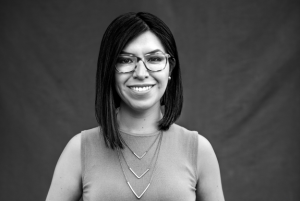
Manrique, 28, is the 2008-2009 Elizabeth Neuffer Fellow, an award established by the International Women’s Media Foundation given to one woman each year to focus “exclusively on human rights journalism and social justice issues.” The recipient of the award, which was founded in honor of a Boston Globe reporter who died in Iraq in 2003, spends nine months as a research associate in residence at the Massachusetts Institute of Technology’s Center for International Studies and interns both at the Boston Globe and The New York Times.